Off-Grid Solar and Battery Systems for Colorado Homes and Cabins
For mountain homes, cabins and ranches where there's no power line, or where bringing one in doesn't pencil out. We size the system around how you actually live, plan for Colorado winters at altitude, and handle the design, county permits, backup generator and install.
Who off-grid solar is for
An off-grid system is your home's whole power plant. There's no utility behind it, so it only makes sense when the grid isn't a realistic option. Our off-grid customers usually fall into one of these groups:
- Full-time mountain homes and cabins at the end of a road with no utility service.
- New builds on rural land where the nearest power line is a long way off.
- Ranches and acreage that need power at a house, shop or well site away from existing service.
- Owners who've priced a line extension from the local utility or co-op and want to compare it with an off-grid design.
- Older off-grid homes with a battery bank or inverter that needs replacing or a system that's outgrown its loads.
Homes and cabins, not RVs or portable kits
We design and install permanent, permitted off-grid systems for houses and cabins. We don't install solar on RVs, campers, vans, trailers or boats, and we don't sell plug-in kits or DIY parts. For those, an RV dealer or a solar supply store is a better fit. A portable power station on its own isn't a whole-home off-grid system, but if you already own one and want it wired into your home for backup, see home battery installation for the brand you chose.
Off-grid or a line extension?
If a power line is anywhere nearby, get a written line-extension estimate from the electric utility or co-op that serves the property before you decide. Line extensions are often billed to the property owner and depend on distance, terrain and easements, so the answer is different on every parcel.
Then compare it with what an off-grid design needs: a bigger solar array and battery bank than a grid-tied home, a backup generator for long storms, and a plan for the loads you'd rather run on propane or wood. If you'd like grid power as the backup instead, a hybrid system may be the better fit. We'll walk you through the off-grid side so you can make the call with real numbers from both.
How we size an off-grid system
Sizing is the whole job. Undersize it and you're running the generator all winter; oversize it and you've paid for capacity you'll never use. We work through five things on every design.
1. Your loads, room by room
We list everything that runs in the home and how often: well pump, furnace or boiler blower, fridge and freezer, lights, internet, a shop or power tools. Well pumps and anything that heats with electricity drive the size more than anything else, so many off-grid homes run space heat, water heat, cooking and clothes drying on propane or wood.
2. Days of autonomy
This is how long the batteries should carry the home with little or no sun, through a string of snowy days. More days means a bigger battery bank; fewer means leaning on the generator sooner. We set it with you based on how you live and how much generator run time you're willing to accept.
3. Winter sun at altitude
December has the shortest days and the lowest sun, and snow can cover panels after a storm. Cold, clear mountain air helps panels produce well, but trees, ridgelines and the sun's low winter angle can shade a site for hours. We design for winter, often with a steeper tilt or a ground mount you can reach to brush off.
4. Battery and inverter capacity
The battery bank has to store enough energy for the dark days, and the inverter has to handle your biggest loads starting at the same time, like a well pump kicking on while the microwave runs. Batteries also need a location that stays within the manufacturer's temperature range.
5. Generator backup
Most whole-home off-grid systems include a generator that recharges the batteries during long storms or heavy-use stretches. We supply and install backup generators and integrate them with the system, or connect a generator you already own, and plan when it should run.
What goes into a whole-home off-grid system
Every design is different, but a permanent off-grid system usually includes:
- A solar array on the roof or on a ground mount, sized for winter production.
- A battery bank that stores power for nights and cloudy stretches.
- An inverter or inverter-charger that runs the home without a utility connection and can take generator input.
- Charge control that manages how solar and the generator refill the batteries.
- A main or load panel, disconnects and code-required safety equipment.
- Monitoring so you can check battery level, solar production and generator run time from your phone where you have internet.
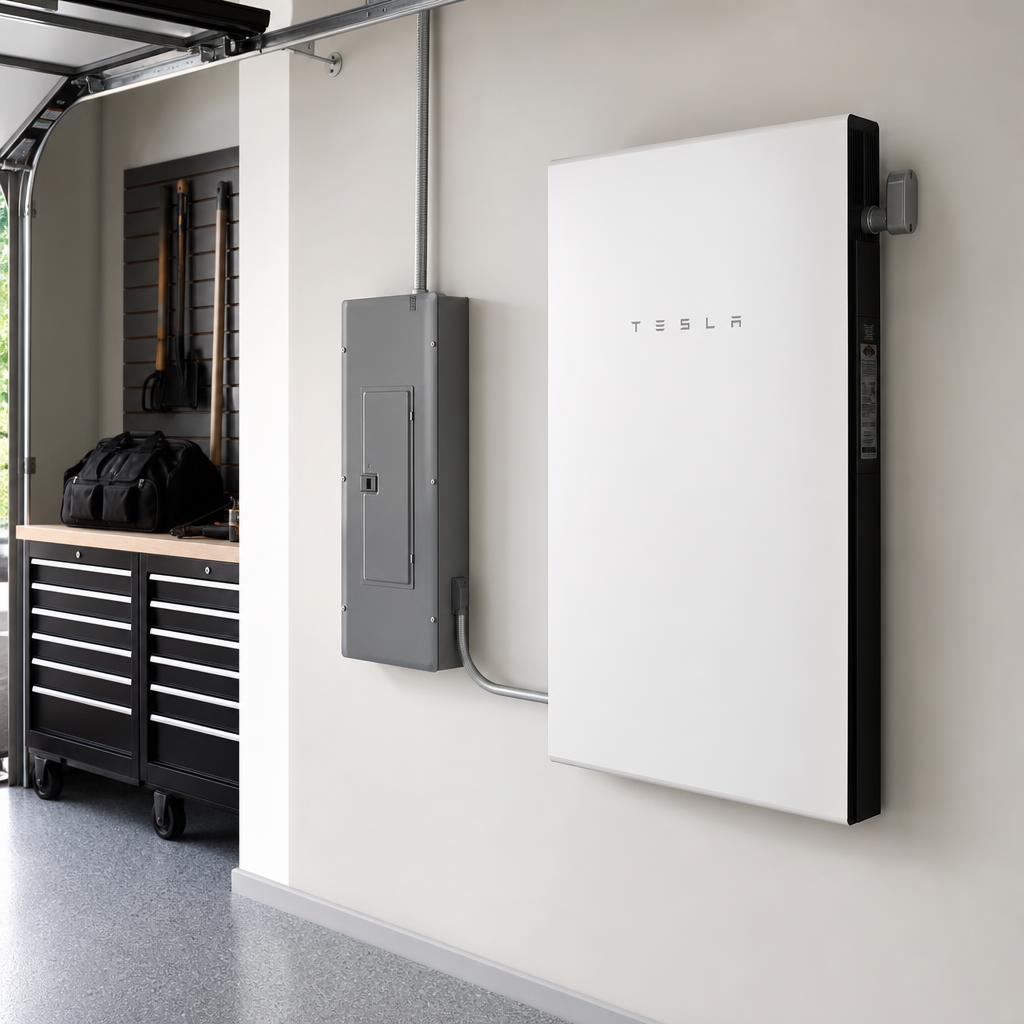
We typically build off-grid systems around Sol-Ark and EG4 equipment, and we'll tell you plainly which equipment fits your loads and why. We're also certified with Enphase, Tesla Powerwall, FranklinWH and EG4.
How an off-grid project works
- 01
Site visit and load review
We walk the property, look at sun and shade through the seasons, check where panels, batteries and a generator can go, and go through your loads with you.
- 02
Design
We size the array, battery bank, inverter and generator connection around your loads and days of autonomy, and explain the trade-offs in plain language.
- 03
Permits
We prepare the plans and pull permits with your county building department, and coordinate inspections.
- 04
Installation
Our licensed electricians install the array, batteries, inverter and wiring, and install and connect the backup generator.
- 05
Commissioning and walkthrough
We test the system, pass inspection, set up monitoring and show you how to read battery level and when the generator will run.
Off-grid repair and expansion
Already living off-grid? We repair and expand existing off-grid systems, including ones we didn't install. We troubleshoot panels, battery banks, inverters, charge control, wiring and generator connections, and fix what's failing.
If your loads have grown or the generator runs more than it should, we can add solar, add battery storage, replace an aging inverter or add generator capacity, and size the upgrade around how you use the home now.
Permits for off-grid solar in Colorado
Off-grid doesn't mean unpermitted. Off-grid solar and battery systems on a home still need permits and inspections from the county building department, and some properties also have HOA covenants or other local rules. Requirements and review times vary by county, and ground mounts can bring their own structural review. We handle the plans, permit applications and inspections for you.
Because a true off-grid home isn't connected to a utility, there's no utility interconnection agreement. If you'd like to stay connected and add backup instead, see our home battery backup page.
Incentives and warranty
Battery storage installed in a Colorado home may qualify for Colorado's state energy-storage tax credit, which applies to systems purchased before January 1, 2027, whether or not the home is connected to the grid. Confirm current terms with your tax professional. Utility rebate programs are generally built for grid-connected customers, so plan on them not applying to an off-grid home.
Every off-grid system we install carries our 10-year workmanship warranty, on top of the manufacturer's equipment warranties. We're rated 4.8 on Google.
Off-grid solar across Colorado's mountains and plains
We design off-grid systems for homes and cabins in the foothills, the high country and ranch country. Local pages for some of the areas we serve:
Foothills west of Denver
Boulder County mountains
Northern Colorado mountains
Pikes Peak region and Teller County
Douglas County ranch land
Frequently asked questions