Grid-Tied, Hybrid or Off-Grid Solar: Which Fits Your Colorado Home?
All three use solar panels. The difference is how they relate to the power grid, what happens in an outage and how big the system has to be. Here's a plain comparison, and how to tell which one fits your property.
The three types in one minute
Grid-tied solar
Panels connect to your home and the utility grid with no battery. The grid supplies power when solar can't, and where your utility offers net metering, extra solar can earn bill credits. It shuts off during an outage, even on a sunny day.
Hybrid solar (grid-tied with battery backup)
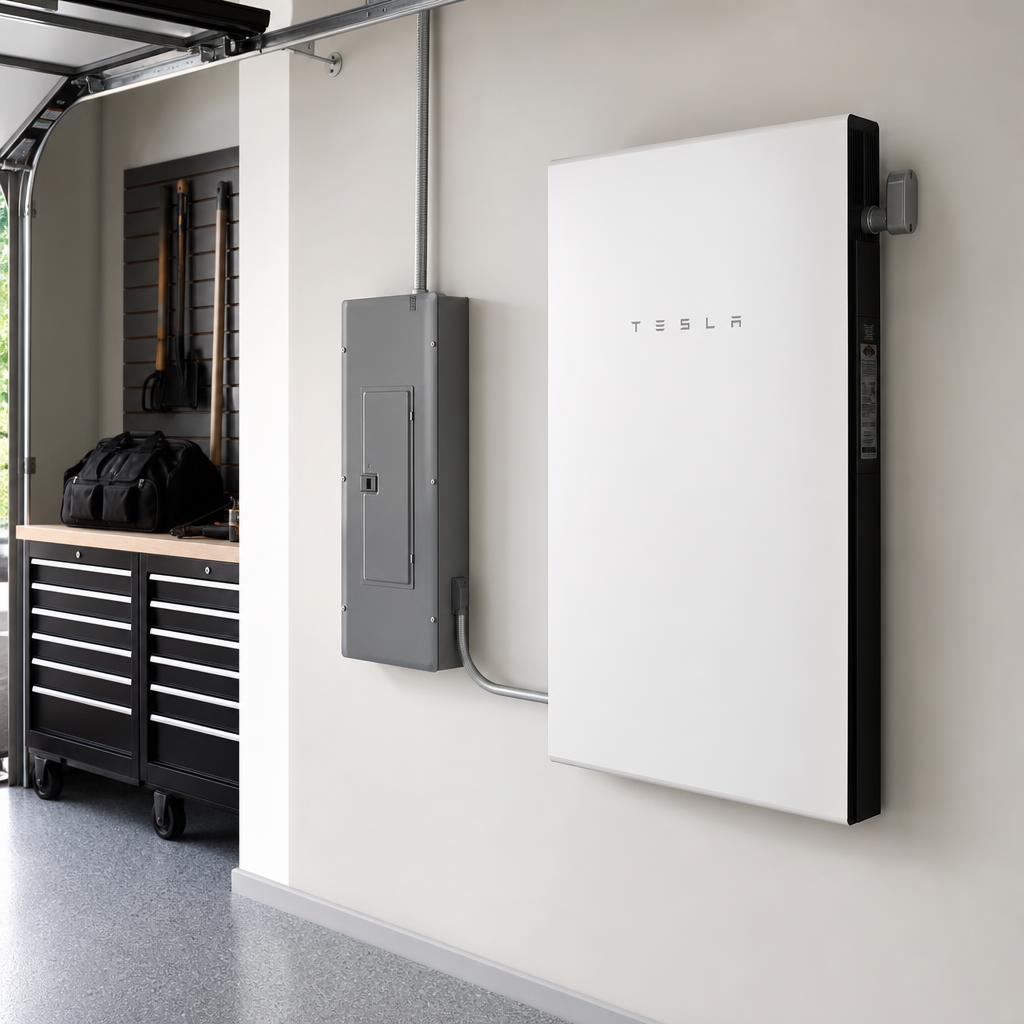
Solar plus a battery, still connected to the grid. In an outage, the home separates from the grid and runs the circuits you choose on stored and solar power. The grid is still there the rest of the time.
Off-grid solar
No utility connection at all. Solar, a battery bank and usually a generator supply every bit of the home's power, every day of the year, so the system has to be sized for winter.
Side-by-side comparison
| Grid-tied | Hybrid | Off-grid | |
|---|---|---|---|
| Utility connection | Yes | Yes | No |
| Power during an outage | No | Yes, for backed-up circuits | Yes, it's always self-powered |
| Battery | None | Sized for backup and evening use | Sized for nights and multi-day storms |
| Bill credits for extra solar | Where the utility offers net metering | Where the utility offers net metering | None, there's no utility bill |
| Generator | Not needed | Optional | Usually part of the design |
| What drives the size | Your annual electric use | Annual use plus what you want backed up | Your worst winter week |
| Best for | Lowering the bill where outages are rare | Homes on the grid that want outage protection | Property with no grid service or a costly line extension |
When grid-tied solar makes sense
If your home already has reliable utility power and your main goal is a lower bill, grid-tied solar is the simplest and smallest system. The grid acts as your backup, and you can add a battery later. See home solar.
When hybrid makes sense
Hybrid fits homes on the grid that lose power often or for a long time, like foothills and rural homes, places with wildfire power shutoffs, or anyone with a well pump, medical equipment or a home office that can't go down. You keep the grid and get backup for the circuits that matter. See home battery backup or adding a battery to existing solar.
When off-grid makes sense
Off-grid fits when there's no grid to connect to: a cabin at the end of a mountain road, a new home on rural land, or a ranch building far from service. It also comes up when a utility's line-extension estimate is high enough that a self-sufficient system is worth comparing. See off-grid solar systems and off-grid cabin solar.
Can I disconnect from the grid if I already have power?
You can, but most connected homes are better served by hybrid. Going fully off-grid means sizing for your worst winter week, adding a generator and giving up the grid as backup and any bill credits. A battery-backed hybrid system gives outage protection without those trade-offs. If you still want to cut the cord, we'll size it honestly so you know what it takes.
Homes and cabins, not RVs or portable kits
We design and install permanent, permitted off-grid systems for houses and cabins. We don't install solar on RVs, campers, vans, trailers or boats, and we don't sell plug-in kits or DIY parts. For those, an RV dealer or a solar supply store is a better fit. A portable power station on its own isn't a whole-home off-grid system, but if you already own one and want it wired into your home for backup, see home battery installation for the brand you chose.
Warranty and incentives
Every system we install carries our 10-year workmanship warranty, on top of the manufacturer's equipment warranties. We're rated 4.8 on Google and certified with Enphase, Tesla Powerwall, FranklinWH and EG4. For off-grid homes, we typically build around EG4 and Sol-Ark equipment and supply and install the backup generator.
Battery storage installed in a Colorado home, on or off the grid, may qualify for Colorado's state energy-storage tax credit for systems purchased before January 1, 2027. Confirm current terms with your tax professional.
Frequently asked questions